
arunmohan
02-04 05:03 PM
Hello All:
Please let us meet in the weekdays for lunch. Please decide day and time. I will be there.
Please let us meet in the weekdays for lunch. Please decide day and time. I will be there.
wallpaper Blairsvillekia optima kia
pcs
07-08 09:57 AM
Post his name & nobody will hire him.

spicy_guy
08-11 12:09 PM
Pappu: Can we do anything about it? It does seem to be a good bill.
If voting on the website really has any impact, why can't we do it?
If voting on the website really has any impact, why can't we do it?
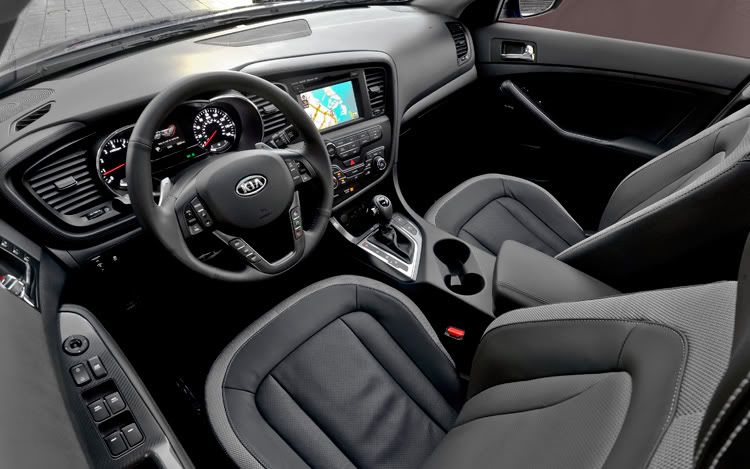
2011 KIA Optima Interior

jsb
05-10 10:25 PM
we received a soft LUD on 04-30 we are july 2007 filers..not sure what it means..
It only means that for whatever reason your electronic case was accessed, which might even mean that someone was training a new employee on how to open a case. Not much significance should be attached to it, however.
It only means that for whatever reason your electronic case was accessed, which might even mean that someone was training a new employee on how to open a case. Not much significance should be attached to it, however.
more...

kutra
01-20 10:37 AM
My wife's co. provides health insurance for both of us. We are both on H1-B.
If my wife quits her job, can we still be eligible for COBRA because at that point she will be doing COS to H4. If someone has any experience or knowledge about this please reply. It will help us deal things better as we are better prepared with what could be our options.
Does COBRA depend on H1-B status? Also recently Obama administration has worked a plan where the payments on COBRA are less than the usual amounts, COBRA subsidy? Can you provide details regarding that?
Why does she need to use COBRA? Certain life changing events such as job loss, birth, etc. allow adding or removing of dependants, or enrolling in an insurance plan outside of the enrollment period. So you should be able to join the insurance plan provided by your employer. If she's quitting her job, she should be eligible to come on to your insurance plan as a dependent. This will be a much cheaper option than using COBRA. Look into this.
If my wife quits her job, can we still be eligible for COBRA because at that point she will be doing COS to H4. If someone has any experience or knowledge about this please reply. It will help us deal things better as we are better prepared with what could be our options.
Does COBRA depend on H1-B status? Also recently Obama administration has worked a plan where the payments on COBRA are less than the usual amounts, COBRA subsidy? Can you provide details regarding that?
Why does she need to use COBRA? Certain life changing events such as job loss, birth, etc. allow adding or removing of dependants, or enrolling in an insurance plan outside of the enrollment period. So you should be able to join the insurance plan provided by your employer. If she's quitting her job, she should be eligible to come on to your insurance plan as a dependent. This will be a much cheaper option than using COBRA. Look into this.

renupond
10-04 05:02 PM
My self and my wife both are on H1B. Both are working for different companies.
I filled I 485, EAD and AP through my company, for my self and my wife.
Questions:
1) I am the primary person. After getting the EAD, Is it possible, If my wife can open a consulting company with her name?
2) After opening a consulting company on her name, Is it possible, she can leave her H1B employer and run her own paystubs on her own company.
Your help will be really appreciated. :)
I filled I 485, EAD and AP through my company, for my self and my wife.
Questions:
1) I am the primary person. After getting the EAD, Is it possible, If my wife can open a consulting company with her name?
2) After opening a consulting company on her name, Is it possible, she can leave her H1B employer and run her own paystubs on her own company.
Your help will be really appreciated. :)
more...

eb2_mumbai
09-11 10:27 AM
I can share my experience. I had BE + 3 Yr Exp + MS + 1.5 Yr Exp when I filed for GC. My employer filed the labor that was MS + 0 Yr exp. He said we cannot claim 1.5 Yr post MS since it was in house experience. The experience I gained after BS was not eligible so he said the post would go as MS + 0 . We did attach my experience certificate for work after BS (nothing for work experience in the same company) as supplimental qualification.
I know lots of friends working in expedia who were hired from our graduate school and their labor were all MS + 0 in EB2
I know lots of friends working in expedia who were hired from our graduate school and their labor were all MS + 0 in EB2
2010 2011 kia optima sx turbo,

purgan
01-22 11:35 AM
http://hbswk.hbs.edu/item/5585.html
The Immigrant Technologist:
Studying Technology Transfer with China
Q&A with: William Kerr and Michael Roberts
Published: January 22, 2007
Author: Michael Roberts
Executive Summary:
Immigrants account for almost half of Ph.D.-level scientists and engineers in the U.S., and are prime drivers of technology development. Increasingly, however, Chinese technologists and entrepreneurs are staying home to pursue opportunities. Is this a brain drain? Professor William Kerr discusses the phenomena of technology transfer and implications for U.S.-based businesses and policymakers.
The trend of Chinese technologists and entrepreneurs staying home rather than moving to the United States is a trend that potentially offers both harm and opportunity to U.S.-based interests.
Immigrants account for almost half of Ph.D.-level scientists and engineers in the U.S. and are strong contributors to American technology development. It is in the United States' interest to attract and retain this highly skilled group.
U.S. multinationals are placing larger shares of their R&D into foreign countries, around 15 percent today. U.S.-based ethnic scientists within multinationals help facilitate the operation of these foreign direct investment facilities in their home countries.
Immigrants account for almost half of Ph.D.-level scientists and engineers in the U.S., and are prime drivers of technology development. Increasingly, however, Chinese technologists and entrepreneurs are staying home to pursue opportunities. Is this a brain drain?
Q: Describe your research and how it relates to what you observed in China.
A: My research focuses on technology transfer through ethnic scientific and entrepreneurial networks. Traditional models of technology diffusion suggest that if you have a great idea, people who are ten feet away from you will learn about that idea first, followed by people who are 100 miles away, and so forth in concentric circles. My research on ethnic networks suggests this channel facilitates faster knowledge transfer and faster adoption of foreign technologies. For example, if the Chinese have a strong presence in the U.S. computer industry, relative to other ethnic groups, then computer technologies diffuse faster to China than elsewhere. This is true even for computer advances made by Americans, as the U.S.-based Chinese increase awareness and tacit knowledge development regarding these advances in their home country.
Q: Is your research relevant to other countries as well?
China is at a tipping point for entrepreneurship on an international scale.A: Yes, I have extended my empirical work to include over thirty industries and nine ethnicities, including Indian, Japanese, Korean, and Hispanic. It is very important to develop a broad sample to quantify correctly the overall importance of these networks. The Silicon Valley Chinese are a very special case, and my work seeks to understand the larger benefit these networks provide throughout the global economy. These macroeconomic findings are important inputs to business and policy circles.
Q: What makes technology transfer happen? Is it entrepreneurial opportunity in the home country, a loyalty to the home country, or government policies that encourage or require people to come home?
A: It's all of those. Surveys of these diasporic communities suggest they aid their home countries through both formal business relationships and informal contacts. Formal mechanisms run the spectrum from direct financial investment in overseas businesses that pursue technology opportunities to facilitating contracts and market awareness. Informal contacts are more frequent�the evidence we have suggests they are at least twice as common�and even more diverse in nature. Ongoing research will allow us to better distinguish these channels. A Beijing scholar we met on the trip, Henry Wang, and I are currently surveying a large population of Chinese entrepreneurs to paint a more comprehensive picture of the micro-underpinnings of this phenomena.
Q: What about multinational corporations? How do they fit into this scenario?
A: One of the strongest trends of globalization is that U.S. multinationals are placing larger shares of their R&D into foreign countries. About 5 percent of U.S.-sponsored R&D was done in foreign countries in the 1980s, and that number is around 15 percent today. We visited Microsoft's R&D center in Beijing to learn more about its R&D efforts and interactions with the U.S. parent. This facility was founded in the late 1990s, and it has already grown to house a third of Microsoft's basic-science R&D researchers. More broadly, HBS assistant professor Fritz Foley and I are working on a research project that has found that U.S.-based ethnic scientists within multinationals like Microsoft help facilitate the operation of these foreign direct investment facilities in their home countries.
Q: Does your research have implications for U.S. policy?
A: One implication concerns immigration levels. It is interesting to note that while immigrants account for about 15 percent of the U.S. working population, they account for almost half of our Ph.D.-level scientists and engineers. Even within the Ph.D. ranks, foreign-born individuals have a disproportionate number of Nobel Prizes, elections to the National Academy of Sciences, patent citations, and so forth. They are a very strong contributor to U.S. technology development, so it is in the United States' interest to attract and retain this highly skilled group. It is one of the easiest policy levers we have to influence our nation's rate of innovation.
Q: Are countries that send their scholars to the United States losing their best and brightest?
A: My research shows that having these immigrant scientists, entrepreneurs, and engineers in the United States helps facilitate faster technology transfer from the United States, which in turn aids economic growth and development. This is certainly a positive benefit diasporas bring to their home countries. It is important to note, however, that a number of factors should be considered in the "brain drain" versus "brain gain" debate, for which I do not think there is a clear answer today.
Q: Where does China stand in relation to some of the classic tiger economies that we've seen in the past in terms of technology transfer?
A: Taiwan, Singapore, Hong Kong, and similar smaller economies have achieved a full transition from agriculture-based economies to industrialized economies. In those situations, technology transfer increases labor productivity and wages directly. The interesting thing about China and also India is that about half of their populations are still employed in the agricultural sector. In this scenario, technology transfer may lead to faster sector reallocation�workers moving from agriculture to industry�which can weaken wage growth compared with the classic tiger economy example. This is an interesting dynamic we see in China today.
Q: The export growth that technology may engender is only one prong of the mechanism that helps economic development. Does technology also make purely domestic industries more productive?
A: Absolutely. My research shows that countries do increase their exports in industries that receive large technology infusions, but non-exporting industries also benefit from technology gains. Moreover, the technology transfer can raise wages in sectors that do not rely on technology to the extent there is labor mobility across sectors. A hairdresser in the United States, for example, makes more money than a hairdresser in China, and that is due in large part to the wage equilibrium that occurs across occupations and skill categories within an economy. Technology transfer may alter the wage premiums assigned to certain skill sets, for example, increasing the wage gaps between skilled and unskilled workers, but the wage shifts can feed across sectors through labor mobility.
Q: What are the implications for the future?
A: Historically, the United States has been very successful at the retention of foreign-born, Ph.D.-level scientists, inventors, and entrepreneurs. As China and India continue to develop, they will become more attractive places to live and to start companies. The returnee pattern may accelerate as foreign infrastructures become more developed for entrepreneurship. This is not going to happen over the next three years, but it is quite likely over the next thirty to fifty years. My current research is exploring how this reverse migration would impact the United States' rate of progress.
About the author
Michael Roberts is a senior lecturer in the Entrepreneurial Management unit at Harvard Business School.
The Immigrant Technologist:
Studying Technology Transfer with China
Q&A with: William Kerr and Michael Roberts
Published: January 22, 2007
Author: Michael Roberts
Executive Summary:
Immigrants account for almost half of Ph.D.-level scientists and engineers in the U.S., and are prime drivers of technology development. Increasingly, however, Chinese technologists and entrepreneurs are staying home to pursue opportunities. Is this a brain drain? Professor William Kerr discusses the phenomena of technology transfer and implications for U.S.-based businesses and policymakers.
The trend of Chinese technologists and entrepreneurs staying home rather than moving to the United States is a trend that potentially offers both harm and opportunity to U.S.-based interests.
Immigrants account for almost half of Ph.D.-level scientists and engineers in the U.S. and are strong contributors to American technology development. It is in the United States' interest to attract and retain this highly skilled group.
U.S. multinationals are placing larger shares of their R&D into foreign countries, around 15 percent today. U.S.-based ethnic scientists within multinationals help facilitate the operation of these foreign direct investment facilities in their home countries.
Immigrants account for almost half of Ph.D.-level scientists and engineers in the U.S., and are prime drivers of technology development. Increasingly, however, Chinese technologists and entrepreneurs are staying home to pursue opportunities. Is this a brain drain?
Q: Describe your research and how it relates to what you observed in China.
A: My research focuses on technology transfer through ethnic scientific and entrepreneurial networks. Traditional models of technology diffusion suggest that if you have a great idea, people who are ten feet away from you will learn about that idea first, followed by people who are 100 miles away, and so forth in concentric circles. My research on ethnic networks suggests this channel facilitates faster knowledge transfer and faster adoption of foreign technologies. For example, if the Chinese have a strong presence in the U.S. computer industry, relative to other ethnic groups, then computer technologies diffuse faster to China than elsewhere. This is true even for computer advances made by Americans, as the U.S.-based Chinese increase awareness and tacit knowledge development regarding these advances in their home country.
Q: Is your research relevant to other countries as well?
China is at a tipping point for entrepreneurship on an international scale.A: Yes, I have extended my empirical work to include over thirty industries and nine ethnicities, including Indian, Japanese, Korean, and Hispanic. It is very important to develop a broad sample to quantify correctly the overall importance of these networks. The Silicon Valley Chinese are a very special case, and my work seeks to understand the larger benefit these networks provide throughout the global economy. These macroeconomic findings are important inputs to business and policy circles.
Q: What makes technology transfer happen? Is it entrepreneurial opportunity in the home country, a loyalty to the home country, or government policies that encourage or require people to come home?
A: It's all of those. Surveys of these diasporic communities suggest they aid their home countries through both formal business relationships and informal contacts. Formal mechanisms run the spectrum from direct financial investment in overseas businesses that pursue technology opportunities to facilitating contracts and market awareness. Informal contacts are more frequent�the evidence we have suggests they are at least twice as common�and even more diverse in nature. Ongoing research will allow us to better distinguish these channels. A Beijing scholar we met on the trip, Henry Wang, and I are currently surveying a large population of Chinese entrepreneurs to paint a more comprehensive picture of the micro-underpinnings of this phenomena.
Q: What about multinational corporations? How do they fit into this scenario?
A: One of the strongest trends of globalization is that U.S. multinationals are placing larger shares of their R&D into foreign countries. About 5 percent of U.S.-sponsored R&D was done in foreign countries in the 1980s, and that number is around 15 percent today. We visited Microsoft's R&D center in Beijing to learn more about its R&D efforts and interactions with the U.S. parent. This facility was founded in the late 1990s, and it has already grown to house a third of Microsoft's basic-science R&D researchers. More broadly, HBS assistant professor Fritz Foley and I are working on a research project that has found that U.S.-based ethnic scientists within multinationals like Microsoft help facilitate the operation of these foreign direct investment facilities in their home countries.
Q: Does your research have implications for U.S. policy?
A: One implication concerns immigration levels. It is interesting to note that while immigrants account for about 15 percent of the U.S. working population, they account for almost half of our Ph.D.-level scientists and engineers. Even within the Ph.D. ranks, foreign-born individuals have a disproportionate number of Nobel Prizes, elections to the National Academy of Sciences, patent citations, and so forth. They are a very strong contributor to U.S. technology development, so it is in the United States' interest to attract and retain this highly skilled group. It is one of the easiest policy levers we have to influence our nation's rate of innovation.
Q: Are countries that send their scholars to the United States losing their best and brightest?
A: My research shows that having these immigrant scientists, entrepreneurs, and engineers in the United States helps facilitate faster technology transfer from the United States, which in turn aids economic growth and development. This is certainly a positive benefit diasporas bring to their home countries. It is important to note, however, that a number of factors should be considered in the "brain drain" versus "brain gain" debate, for which I do not think there is a clear answer today.
Q: Where does China stand in relation to some of the classic tiger economies that we've seen in the past in terms of technology transfer?
A: Taiwan, Singapore, Hong Kong, and similar smaller economies have achieved a full transition from agriculture-based economies to industrialized economies. In those situations, technology transfer increases labor productivity and wages directly. The interesting thing about China and also India is that about half of their populations are still employed in the agricultural sector. In this scenario, technology transfer may lead to faster sector reallocation�workers moving from agriculture to industry�which can weaken wage growth compared with the classic tiger economy example. This is an interesting dynamic we see in China today.
Q: The export growth that technology may engender is only one prong of the mechanism that helps economic development. Does technology also make purely domestic industries more productive?
A: Absolutely. My research shows that countries do increase their exports in industries that receive large technology infusions, but non-exporting industries also benefit from technology gains. Moreover, the technology transfer can raise wages in sectors that do not rely on technology to the extent there is labor mobility across sectors. A hairdresser in the United States, for example, makes more money than a hairdresser in China, and that is due in large part to the wage equilibrium that occurs across occupations and skill categories within an economy. Technology transfer may alter the wage premiums assigned to certain skill sets, for example, increasing the wage gaps between skilled and unskilled workers, but the wage shifts can feed across sectors through labor mobility.
Q: What are the implications for the future?
A: Historically, the United States has been very successful at the retention of foreign-born, Ph.D.-level scientists, inventors, and entrepreneurs. As China and India continue to develop, they will become more attractive places to live and to start companies. The returnee pattern may accelerate as foreign infrastructures become more developed for entrepreneurship. This is not going to happen over the next three years, but it is quite likely over the next thirty to fifty years. My current research is exploring how this reverse migration would impact the United States' rate of progress.
About the author
Michael Roberts is a senior lecturer in the Entrepreneurial Management unit at Harvard Business School.
more...

nkavjs
11-15 09:47 AM
Tri State Folks,
You just saw priority dates in Dec visa bulletin. What do you plan to do now?
I have some answers for you but would like to hear from you first..
Hello IV members : I am mad about discrimination agst Indian and China born applicants for GC processing times. I have read many posts in here and it states to join tri-state chapters .. What does it mean? How can we be part of this.. Pls. elaborate.
Thanks
You just saw priority dates in Dec visa bulletin. What do you plan to do now?
I have some answers for you but would like to hear from you first..
Hello IV members : I am mad about discrimination agst Indian and China born applicants for GC processing times. I have read many posts in here and it states to join tri-state chapters .. What does it mean? How can we be part of this.. Pls. elaborate.
Thanks
hair 2011 kia optima sx turbo,

bbenhill
04-08 12:48 PM
I filed paper last year by myself (no additional $150) ... it's really easy .. only filled some basic questions .. I like paper because all my documents will be on the same envelope :D
online filing you still need to send some documents via mail.
will do the same this year (paper filing)..
Paper is at least $150 more (lawyer fee), but saves your visit to INS office for finger printing.
online filing you still need to send some documents via mail.
will do the same this year (paper filing)..
Paper is at least $150 more (lawyer fee), but saves your visit to INS office for finger printing.
more...

stueym
07-09 03:48 PM
Thank you for all your support. Quick update. Our video now has 1439 viewings, 132 ratings and 38 comments (as at 4:15pm EDT 7/9). This has resulted in us having the #32 top rated video of the week in News and Politics. Your support has been wonderful and thank you for your positive comments.
We have looked at a large number of the other videos in the competition and we certainly have a much higher rating and viewings than any of the videos other than the ones posted in the first week of the competition. Sadly we dont want to monitor them as every time we check their score it rates as another viewing for them :p
We remain hopeful that our moderate position on a difficult topic may give us an edge but who knows. My son is dying to pose a supplementary to the video question about the byzantine process we all have to endure.
Will keep you updated.
We have looked at a large number of the other videos in the competition and we certainly have a much higher rating and viewings than any of the videos other than the ones posted in the first week of the competition. Sadly we dont want to monitor them as every time we check their score it rates as another viewing for them :p
We remain hopeful that our moderate position on a difficult topic may give us an edge but who knows. My son is dying to pose a supplementary to the video question about the byzantine process we all have to endure.
Will keep you updated.
hot 2011 Kia Optima SX Turbo shift

RiaonH4
01-18 11:13 AM
Cool. Thanks for your replies. One more question. Are you guys currently in US and have applied 485. How do i use Canadian citizenship and 485 pending to maximize my opportunities in us and also have Canadian citizenship as a backup?
Ria
:D
King37 sent you a PM
Ria
:D
King37 sent you a PM
more...
house 2011 KIA OPTIMA SX TURBO

pitha
01-15 05:43 PM
not to be cynical but what sort of "change" is on the way with CIR, if you are "illegal" sure some good change is on the way, but if you are a legal eb immigrant not sure what is in store for us, it is not necessary to be good with points based nonsense etc.
For sure visa recapture independent of CIR is the best possible outcome.
Anyway lets call lofgren and ask for visa recapture. I have already called and asked, please all of you do the same. It will give her confidence that there is support for it if all of us call.
Don't keep your expectations so low. Change is on the way ! Senate's color has changed. ;)
For sure visa recapture independent of CIR is the best possible outcome.
Anyway lets call lofgren and ask for visa recapture. I have already called and asked, please all of you do the same. It will give her confidence that there is support for it if all of us call.
Don't keep your expectations so low. Change is on the way ! Senate's color has changed. ;)
tattoo 2011 kia optima sx turbo,

Sakthisagar
11-11 09:21 AM
I do not know whether this can be done, always consult with an attorney.
any Notarized document is as good as oringinals, Please get signed all your certificate copies showing the originals to a Notary Public, I think this should work. If you decide to send originals attach a self paid courier (Fed-ex)(to address yours) USCIS will never send back the document otherwise. I remember previously the H1B visa stamping was in US itself to get the passport back we need to send a self addressed FED-EX cover pre-paid.
Good Luck.
any Notarized document is as good as oringinals, Please get signed all your certificate copies showing the originals to a Notary Public, I think this should work. If you decide to send originals attach a self paid courier (Fed-ex)(to address yours) USCIS will never send back the document otherwise. I remember previously the H1B visa stamping was in US itself to get the passport back we need to send a self addressed FED-EX cover pre-paid.
Good Luck.
more...
pictures 2011 Kia Optima SX Turbo

EndlessWait
01-10 03:00 PM
Applied July 23rd NSC. Receipt notice July 23rd and again another receipt September once my case went to CSC and back to NSC.
Got AP and EAD issued from CA (laguna Niguel USCIS) though not without headaches (RFE on AP)
took infopass appointment last week and officer said FPs havent been issued because Background check still not cleared for me (wife cleared but she will not get FP notice until mine is cleared). This is possibly the same reason you have not received yours. looks like i am stuck for the long haul in name check clearance.
good luck to you!
even mine is 23rd july case..and is ur case status still showing "transferred to NSC blah blah..." ?
Got AP and EAD issued from CA (laguna Niguel USCIS) though not without headaches (RFE on AP)
took infopass appointment last week and officer said FPs havent been issued because Background check still not cleared for me (wife cleared but she will not get FP notice until mine is cleared). This is possibly the same reason you have not received yours. looks like i am stuck for the long haul in name check clearance.
good luck to you!
even mine is 23rd july case..and is ur case status still showing "transferred to NSC blah blah..." ?
dresses 2011 Kia Optima SX

Thiru
09-23 04:02 PM
I got email notification through e-mail my AP approval on 4th sep 2009.Not yet received AP document by mail.The processing center is TSC.Anybody in the same situation?
My attorney Received Physical AP approval Document Today.
My attorney Received Physical AP approval Document Today.
more...
makeup 2011 Kia Optima SX

nhfirefighter13
July 15th, 2004, 08:24 PM
Excellent work! You need to start sending copies of those out to publications to see what kind of response you get...or possibly some stock photo companies. :)
girlfriend 2011 Kia Optima SX Turbo

lost_in_migration
05-15 12:24 PM
The problem of retrogression hits high skilled immigrants of all the countries and this is specially true for EB3. Hope more and more non-Indians sign-up for IV.
This poll is highly skewed because majority of people on this forum are Indians, it does not really make sense to do this poll.
This poll is highly skewed because majority of people on this forum are Indians, it does not really make sense to do this poll.
hairstyles 2011 Kia Sorento SX Front

onemorecame
03-25 03:09 PM
In transit Visa how many days/long one can stay in dubai.Any idea?
nandakumar
03-06 01:22 PM
Pls confirm email id - info@immigrationvoice.org for FOIA letter?
alterego
03-13 12:27 AM
Congrats.
Apparently TSC is having some difficulty with their online system. My lawyer told me this this week.
Apparently TSC is having some difficulty with their online system. My lawyer told me this this week.


